
CVE-2026-65816: Azure Arc Bug - What It Means for Your Business and How to Respond
Introduction
CVE-2026-65816 is a critical security flaw in Microsoft Azure Arc that could allow an unauthorized attacker to gain higher-level access over a network. Because Azure Arc is often used to connect servers, Kubernetes clusters, and other infrastructure to Azure management services, organizations that rely on hybrid or multi-cloud operations should treat this issue as a priority.
The vulnerability carries a maximum severity rating, and its exploitation does not require a valid user account or a person to click a malicious link. That combination makes it relevant to any organization using affected Azure Web Apps configurations with Azure Arc integration, including enterprises, public-sector organizations, and growing businesses with distributed infrastructure.
This post explains what the vulnerability is, who may be affected, the business consequences of an exploit, and the practical steps your organization should take. A technical appendix provides detection, verification, and remediation guidance for security engineers and IT teams.
Background & History
Microsoft disclosed CVE-2026-65816 on August 20, 2026, as an elevation-of-privilege vulnerability in Azure Arc. The issue is classified as CWE-706, “Use of Incorrectly-Resolved Name or Reference,” meaning the system may resolve a name or reference to the wrong identity, resource, or permission context.
Microsoft assigned the vulnerability a CVSS v3.1 base score of 10.0, its highest severity rating. The score reflects network-based exploitation, low attack complexity, no required privileges or user interaction, and potential impact across confidentiality, integrity, and availability.
The affected product is listed as Microsoft Azure Web Apps in configurations involving Azure Arc. Microsoft’s security advisory is the authoritative source for patch availability and deployment details. As of the latest available record, the issue had not been added to CISA’s Known Exploited Vulnerabilities catalog, but organizations should not delay remediation based on that status alone.
What This Means for Your Business
If your organization uses Azure Arc to manage servers or applications across on-premises data centers, other clouds, or Azure, this vulnerability could undermine the boundary between those environments. An attacker who gains elevated privileges may be able to access systems, change configurations, deploy malicious workloads, or move deeper into your cloud environment.
The immediate operational risk is disruption. Compromised management access can affect application availability, delay releases, interrupt customer-facing services, and force your team into emergency response mode. Recovery can be more expensive than prevention because teams may need to validate configurations, rotate credentials, and rebuild trust in affected systems.
There is also a data protection concern. Elevated access can expose sensitive business records, customer information, intellectual property, or regulated data. For organizations in healthcare, financial services, retail, or government contracting, a confirmed compromise can trigger notification duties, customer communication, legal review, and regulatory scrutiny.
Reputational harm often follows operational and data harm. Customers and partners expect cloud-connected systems to be managed securely. A publicized incident involving privileged cloud access can weaken trust, complicate sales and procurement conversations, and give competitors an advantage. Addressing this vulnerability promptly is therefore a business continuity decision, not merely an IT task.
Real-World Examples
Regional Financial Services Provider: A regional bank uses Azure Arc to manage servers in branch data centers and its Azure environment. If exploited, an attacker could gain elevated access to management components, potentially exposing customer account data or interfering with systems that support payments and reporting. The institution could face regulatory notification obligations and loss of customer confidence.
Mid-Market Healthcare Organization: A healthcare provider connects clinical and administrative servers through Azure Arc for centralized monitoring and policy enforcement. A successful privilege escalation could expose protected health information or disrupt access to scheduling, records, or operational systems. Beyond remediation costs, the organization may need to notify patients and regulators.
SaaS Company With Hybrid Infrastructure: A growing software company uses Azure Arc to manage virtual machines across its own data center and Azure. An attacker with elevated privileges could alter deployment configurations, access source code or customer data, or interrupt service delivery. Downtime and data exposure could directly affect contractual commitments and customer retention.
Public Sector Agency: A government agency uses Azure Arc to bring legacy on-premises systems under centralized management. Exploitation could give an unauthorized actor greater control over infrastructure supporting citizen services. The result could include service outages, sensitive-data exposure, procurement delays, and heightened public scrutiny.
Am I Affected?
- You may be affected if your organization uses Microsoft Azure Web Apps in a configuration that includes Azure Arc integration.
- You should review your environment if Azure Arc agents or Azure Arc-enabled resources are deployed across on-premises servers, other cloud providers, or Azure.
- You should prioritize review if your Azure environment supports production applications, customer data, regulated information, or business-critical workloads.
- You should check Microsoft’s official advisory for the current list of affected configurations, patch availability, and any version-specific guidance.
- You should assume exposure is possible if your asset inventory cannot confirm which servers, clusters, or applications are connected through Azure Arc.
- You should involve your cloud, security, and application teams immediately if you identify affected Azure Arc integrations in production.
Key Takeaways
- CVE-2026-65816 is a critical Azure Arc privilege-escalation vulnerability disclosed by Microsoft on August 20, 2026.
- The flaw can potentially be exploited over a network without valid credentials or user interaction, making unpatched environments a serious concern.
- Organizations using Azure Web Apps with Azure Arc integration should verify exposure and apply Microsoft’s official remediation guidance.
- A successful exploit could affect service availability, expose sensitive data, create compliance obligations, and damage customer trust.
- Asset visibility, rapid patching, privileged-access controls, and incident-response readiness reduce both the likelihood and impact of exploitation.
Call to Action
If your organization uses Azure Arc or operates hybrid cloud infrastructure, do not wait for an incident to test your defenses. IntegSec can help you validate exposure, assess privilege boundaries, and identify the weaknesses that attackers are most likely to exploit. Visit https://integsec.com to schedule a penetration test and strengthen your cybersecurity posture with practical, business-focused risk reduction.
Technical Appendix
A — Technical Analysis
CVE-2026-65816 is an elevation-of-privilege vulnerability in Azure Arc caused by CWE-706, Use of Incorrectly-Resolved Name or Reference. The weakness involves incorrect resolution of a name or reference, which can cause an operation to be evaluated in an unintended security or authorization context.
The affected component is Azure Arc as used with Microsoft Azure Web Apps. Microsoft’s advisory identifies the issue as an Azure Arc elevation-of-privilege vulnerability and is the authoritative reference for affected configurations and remediation.
The attack vector is network-based, with low attack complexity, no privileges required, and no user interaction required. Microsoft’s CVSS v3.1 vector is CVSS:3.1/AV:N/AC:L/PR:N/UI:N/S:C/C:H/I:H/A:H, with a base score of 10.0. The scope change and high impact ratings indicate that exploitation could affect resources beyond the initially vulnerable component.
B — Detection & Verification
Version enumeration commands:
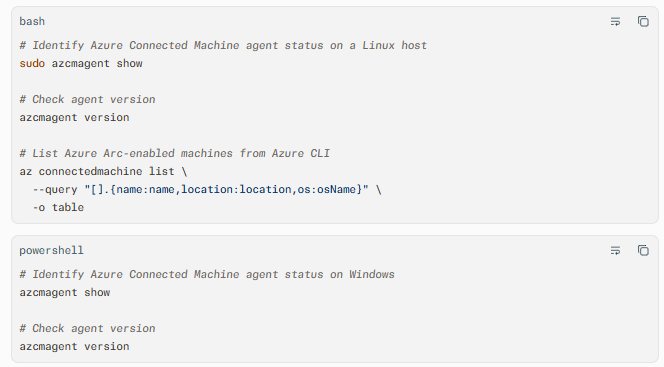
Scanner signatures: Configure vulnerability scanners to flag Microsoft Azure Web Apps configurations with Azure Arc integration and reference CVE-2026-65816. Because the CPE entry does not provide a version qualifier, scanner results should be validated against Microsoft’s advisory and the deployed Azure Arc agent configuration.
Log indicators: Review Azure Activity Logs, Azure Arc resource logs, and host-level agent logs for unexpected role assignments, unusual management-plane operations, configuration changes, or authentication from unfamiliar identities and IP addresses.
Behavioral anomalies: Look for new privileged identities, unexpected resource deployments, modified extensions or policies, abnormal service principal activity, and management operations occurring outside normal administrative windows.
Network exploitation indicators: Monitor for unexpected connections to Azure management endpoints from Arc-enabled hosts, unusual outbound traffic patterns, and management API calls that do not correspond to approved automation or administrator activity.
C — Mitigation & Remediation
- Immediate (0–24h): [action] Identify all Azure Arc-enabled resources and Azure Web Apps integrations, review Microsoft’s advisory, and apply the official vendor patch or configuration update as soon as it is available. Restrict administrative access to Azure Arc management functions, enforce conditional access and multifactor authentication for privileged accounts, and review recent privileged operations for signs of abuse.
- Short-term (1–7d): [action] For environments that cannot patch immediately, reduce exposure by limiting network access to management interfaces, applying least-privilege role assignments, disabling unnecessary Arc extensions, and isolating high-risk systems. Validate identity permissions, rotate exposed credentials where warranted, and confirm that logging and alerting cover Azure Arc management activity.
- Long-term (ongoing): [action] Maintain an accurate inventory of Azure Arc-enabled assets, standardize privileged-access reviews, and use policy-as-code to prevent excessive permissions. Incorporate cloud and hybrid infrastructure into penetration testing, threat modeling, and vulnerability management. Track Microsoft security advisories and verify remediation through recurring configuration and identity assessments.
D — Best Practices
- Maintain a complete, continuously updated inventory of Azure Arc-enabled servers, clusters, applications, and extensions.
- Apply least-privilege access to Azure Arc identities, service principals, managed identities, and administrative roles.
- Require multifactor authentication and conditional access for all privileged cloud and hybrid-management accounts.
- Monitor Azure Activity Logs, identity events, and host agent activity for unexpected privilege or configuration changes.
- Test patches and configuration changes in a controlled environment, then deploy them promptly to production with verification and rollback procedures
Leave Comment