
CVE-2026-63455: HPE SD-WAN Orchestrator Authentication Bypass - What It Means for Your Business and How to Respond
Introduction
If your organization relies on HPE Networking SD-WAN Orchestrator to manage wide-area network connectivity, CVE-2026-63455 demands immediate attention. This critical-severity vulnerability allows attackers to bypass authentication entirely and gain unauthorized access to sensitive system functions without valid credentials. Organizations across North America using affected versions face elevated risk of data exposure, operational disruption, and regulatory scrutiny. This post explains what this vulnerability means for your business operations, how to determine if you are affected, and the concrete steps you should take to protect your organization.
Background & History
CVE-2026-63455 was publicly disclosed on August 4, 2026, when the National Vulnerability Database published initial details about multiple flaws in the REST API interface of HPE Networking SD-WAN Orchestrator. The vulnerability carries a CVSS v3.1 base score of 9.8, classified as Critical severity. Security researchers identified this as an authentication bypass flaw, meaning attackers can access system functions without providing valid login credentials. The affected product is HPE EdgeConnect SD-WAN Orchestrator, specifically versions 9.6.2.00000 through 9.6.2.40208 and 9.6.3.00000 through 9.6.3.40137. HPE released security advisories shortly after disclosure, and the vulnerability was last updated in the NVD database on August 6, 2026. To date, no confirmed exploitation in the wild has been reported, though the high severity rating and low attack complexity make this a priority for remediation.
What This Means for Your Business
This vulnerability poses direct threats to your core business operations, data security, and regulatory compliance posture. An attacker who exploits this flaw gains the ability to view and modify sensitive information on your SD-WAN Orchestrator system without needing usernames or passwords. For your operations, this means potential disruption to network management functions that keep your branch offices, retail locations, and remote workers connected. Your data faces exposure risk because the orchestrator typically holds configuration details, network topology information, and potentially credentials for downstream systems. From a reputation standpoint, any breach stemming from this vulnerability could erode customer and partner trust, especially if sensitive data becomes compromised. For organizations in regulated industries such as finance, healthcare, or critical infrastructure, this vulnerability creates compliance exposure. Regulatory frameworks including PCI DSS, HIPAA, and sector-specific cybersecurity requirements mandate timely patching of critical vulnerabilities. Failure to address CVE-2026-63455 could result in audit findings, fines, or increased scrutiny following any security incident. Your organization's risk profile increases significantly if you operate in sectors where network availability directly impacts revenue or public safety.
Real-World Examples
Regional Financial Institution: A credit union operating 40 branch locations across the Midwest uses HPE SD-WAN Orchestrator to manage connectivity between branches and data centers. An attacker exploiting this vulnerability could reconfigure network routes, intercept transaction data, or disable connectivity to branches during peak business hours. The operational impact would include halted transactions, customer service disruptions, and potential regulatory reporting obligations under FFIEC guidelines.
Healthcare Network: A multi-hospital system managing patient records and telemedicine platforms relies on SD-WAN for secure connectivity between facilities. Unauthorized access to the orchestrator could allow attackers to view network configurations that reveal where patient data flows, modify traffic routing to intercept communications, or disrupt connectivity to critical care facilities. HIPAA compliance would be directly implicated, with breach notification requirements triggered if protected health information becomes exposed.
Retail Chain: A national retailer with 200 stores uses SD-WAN to connect point-of-sale systems, inventory management, and corporate headquarters. Exploitation could enable attackers to isolate stores from payment processors, modify network settings to facilitate card data interception, or disrupt inventory synchronization during peak shopping periods. PCI DSS compliance obligations would require immediate investigation and potentially forensic analysis if cardholder data environments are affected.
Manufacturing Company: An industrial manufacturer with distributed production facilities depends on SD-WAN for real-time coordination between plants and supply chain systems. An attacker gaining orchestrator access could disrupt production scheduling communications, intercept proprietary design data in transit, or isolate facilities from enterprise resource planning systems. The business impact would cascade through production delays, missed shipments, and potential intellectual property exposure.
Am I Affected?
Use this checklist to determine whether your organization faces exposure from CVE-2026-63455:
- You are running HPE Networking SD-WAN Orchestrator (also marketed as HPE EdgeConnect SD-WAN Orchestrator)
- Your installed version is 9.6.2.00000 or later, up to and including 9.6.2.40208
- Your installed version is 9.6.3.00000 or later, up to and including 9.6.3.40137
- You have not yet applied the vendor-provided security patch released after August 2026
- Your SD-WAN Orchestrator instance is accessible from external networks or the internet
- You operate in a regulated industry where critical vulnerability patching timelines are mandated
If you answered yes to any of these items, your organization should treat this as a high-priority security incident requiring immediate action.
Key Takeaways
- CVE-2026-63455 is a critical authentication bypass affecting HPE SD-WAN Orchestrator versions 9.6.2.x and 9.6.3.x up to specific build numbers.
- Attackers can access your system without credentials, creating risks to operations, data security, reputation, and regulatory compliance.
- Financial services, healthcare, retail, and manufacturing organizations face particularly severe business impacts if this vulnerability is exploited.
- You are affected if you run HPE EdgeConnect SD-WAN Orchestrator versions 9.6.2.00000–9.6.2.40208 or 9.6.3.00000–9.6.3.40137 without patches.
- Immediate patching is the primary remediation, with network isolation and access controls serving as interim protections.
Call to Action
Do not wait for exploitation to validate your risk posture. Contact IntegSec today to schedule a comprehensive penetration test that evaluates your SD-WAN infrastructure and broader cybersecurity defenses. Our team delivers actionable findings that drive measurable risk reduction across your technology environment. Visit https://integsec.com to engage our experts and strengthen your security program with confidence.
TECHNICAL APPENDIX
A — Technical Analysis
CVE-2026-63455 stems from multiple vulnerabilities in the REST API interface of HPE Networking SD-WAN Orchestrator that collectively enable web authentication bypass. The root cause maps to CWE-306 (Missing Authentication for Critical Function), where certain API endpoints fail to enforce authentication checks before granting access to system functions. The attack vector is network-based (AV:N), requiring no privileges (PR:N) and no user interaction (UI:N), with low attack complexity (AC:L). The CVSS v3.1 vector string is CVSS:3.1/AV:N/AC:L/PR:N/UI:N/S:U/C:H/I:H/A:H, yielding a base score of 9.8. The vulnerability affects the EdgeConnect SD-WAN Orchestrator component responsible for managing REST API authentication flows. NVD reference: https://nvd.nist.gov/vuln/detail/CVE-2026-63455. Successful exploitation grants attackers full read, modify, and delete access to orchestrator functions and sensitive data stored on the target system.
B — Detection & Verification
Version Enumeration:
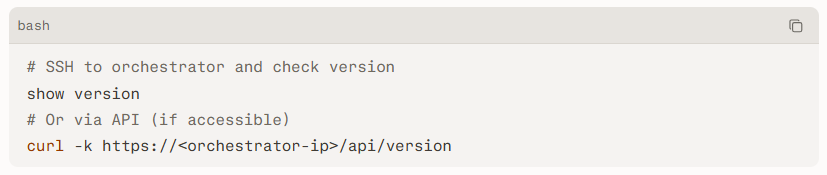
Scanner Signatures:
- Tenable Nessus plugin ID: Check vendor advisory for specific plugin
- Qualys QID: Reference HPE security bulletin for detection QIDs
- Rapid7 InsightVM: Vulnerability appears in HPE SD-WAN Orchestrator checks
Log Indicators:
- Unusual REST API access patterns without corresponding authentication events
- API calls to sensitive endpoints (configuration, user management) from unexpected source IPs
- Spikes in 200 OK responses to administrative API endpoints during off-hours
Behavioral Anomalies:
- Configuration changes without corresponding authenticated administrator sessions
- New user accounts or privilege escalations without approval workflow
- Network route modifications outside change management windows
Network Exploitation Indicators:
- Direct HTTP/HTTPS requests to REST API endpoints bypassing login pages
- Requests lacking authentication headers or tokens to protected endpoints
- Reconnaissance traffic targeting /api/ paths on orchestrator management interfaces
C — Mitigation & Remediation
1. Immediate (0–24h):
- Apply the official HPE security patch for CVE-2026-63455 to all affected orchestrator instances
- If patching is not immediately feasible, restrict network access to the orchestrator management interface using firewall rules (allow only trusted management IPs)
- Disable external/internet-facing access to the orchestrator REST API if currently enabled
- Review authentication logs for suspicious API access patterns since August 2026
2. Short-term (1–7d):
- Verify patch installation by confirming version numbers exceed 9.6.2.40208 or 9.6.3.40137
- Implement network segmentation to isolate orchestrator management interfaces from untrusted networks
- Enable enhanced logging on orchestrator instances and forward logs to SIEM for continuous monitoring
- Conduct vulnerability scan across all SD-WAN infrastructure to confirm no other affected instances remain unpatched
- Review and harden API access controls, ensuring only necessary endpoints are exposed
3. Long-term (ongoing):
- Establish automated patch management workflows for SD-WAN infrastructure with defined SLAs for critical vulnerabilities
- Integrate SD-WAN orchestrator into regular penetration testing cycles to validate security controls
- Implement zero-trust network access principles for management interfaces, requiring multi-factor authentication
- Subscribe to HPE security advisories and vendor notification services for early vulnerability awareness
- Document and test incident response procedures specific to SD-WAN infrastructure compromise scenarios
Official Vendor Patch: HPE has released patches addressing CVE-2026-63455. Affected customers should download and apply updates from the HPE Support Center or contact HPE technical support for assistance. Patch versions exceed 9.6.2.40208 for the 9.6.2.x branch and 9.6.3.40137 for the 9.6.3.x branch.
Interim Mitigations: For environments unable to patch immediately, implement strict firewall rules limiting orchestrator access to designated management networks only. Disable any internet-facing exposure of the REST API interface. Consider deploying web application firewall rules to block unauthenticated requests to known vulnerable API endpoints.
D — Best Practices
- Enforce network segmentation for all management interfaces, ensuring SD-WAN orchestrators are never directly internet-accessible
- Implement multi-factor authentication for all administrative access to network orchestration platforms
- Establish automated vulnerability scanning with defined remediation SLAs (72 hours for critical severity)
- Maintain an accurate asset inventory including software versions to accelerate impact assessment during vulnerability disclosures
- Conduct regular penetration testing of network management infrastructure to validate authentication controls and API security
Leave Comment