
CVE-2026-20272: Cisco IOS XE Command Injection Class Flaw - What It Means for Your Business and How to Respond
Introduction
If your organization relies on Cisco networking equipment, CVE-2026-20272 demands your immediate attention. This critical vulnerability affects Cisco IOS XE Software, the operating system powering thousands of enterprise routers, switches, and wireless controllers across North America. While the technical details remain partially undisclosed by Cisco, the severity rating and scope leave no room for complacency. This post explains what business leaders need to know about the risk, how to determine if you are affected, and the steps you should take to protect your operations.
Background & History
Cisco publicly disclosed CVE-2026-20272 on August 5, 2026, as part of an IOS XE Software Security Hardening Release. The vulnerability was identified through Cisco's internal security testing processes, which now incorporate advanced AI-assisted analysis. Cisco assigned the flaw a CVSS 3.1 base score of 9.8, marking it as critical severity. In plain language, this is a command injection class vulnerability, meaning an attacker could potentially execute unauthorized commands on affected network devices. The weakness falls under CWE-74, which covers improper neutralization of special elements in output used by downstream components. Cisco published fixed IOS XE versions for the evaluated software trains and confirmed that no workaround addresses the underlying issues. At the time of disclosure, Cisco reported no known public exploitation or malicious use of the vulnerability.penligent
What This Means for Your Business
This vulnerability poses significant risks to your business operations, data security, and reputation. Cisco IOS XE devices often serve as the backbone of enterprise networks, handling routing, segmentation, wireless access, and administrative connectivity. If exploited, this flaw could allow attackers to modify configurations, expose credentials, disrupt services, or use your network infrastructure as a pivot point to access other systems. The operational impact could range from temporary network outages to complete loss of control over critical infrastructure. From a compliance perspective, failing to address a critical vulnerability of this nature may violate requirements under frameworks such as PCI DSS, HIPAA, or SOC 2, which mandate timely patching of known security issues. Your organization's reputation could also suffer if customers or partners learn that you neglected to remediate a publicly disclosed critical flaw. The good news is that Cisco has released fixed software versions, and upgrading your affected devices will eliminate the risk.
Real-World Examples
Regional Bank: A mid-sized bank with 50 branch locations runs Cisco IOS XE routers for WAN connectivity. If unpatched, an attacker with network access could potentially execute commands to redirect traffic, intercept sensitive financial data, or disrupt online banking services.
Healthcare Network: A hospital system uses Cisco wireless controllers to manage patient-care devices and staff communications. Exploitation could allow unauthorized access to the management plane, enabling attackers to disable wireless networks or pivot into systems storing protected health information.
Manufacturing Company: A manufacturer relies on Cisco switches for factory-floor segmentation between operational technology and corporate IT. A successful attack could breach this segmentation, allowing threats to spread from office networks into production systems and causing costly downtime.
Professional Services Firm: A consulting firm with multiple offices uses Cisco routers for site-to-site VPN tunnels. Compromise of these devices could expose internal communications, client data, or provide attackers with persistent access to the firm's entire network infrastructure.
Am I Affected?
You are affected if any of the following conditions apply to your environment:
- You are running Cisco IOS XE Software in release trains 17.9, 17.12, 17.15, 17.18, or 26.1.penligent
- Your device version is earlier than 17.9.10, 17.12.8, 17.15.6, 17.18.4 (or 17.18.4a), or 26.1.2.penligent
- Your IOS XE devices operate in autonomous mode or controller mode.
- You have not yet upgraded to the fixed releases Cisco published on August 5, 2026.penligent
- You are unsure which IOS XE versions your network devices are currently running.
Cisco states that affected status applies regardless of device configuration, so disabling specific services does not remove the need to upgrade.
Key Takeaways
- CVE-2026-20272 is a critical command injection class flaw affecting Cisco IOS XE Software with a CVSS score of 9.8.penligent
- The vulnerability could allow attackers to execute unauthorized commands on network infrastructure, risking operations, data, and compliance.
- Cisco has released fixed software versions, and there are no workarounds that address the underlying issues.
- You should inventory your IOS XE devices, verify their running versions, and upgrade to the appropriate fixed release immediately.
- Affected status applies regardless of device configuration, so upgrading is the only reliable remediation.
Call to Action
Do not wait for exploitation reports to act on this critical vulnerability. Contact IntegSec today to schedule a penetration test and comprehensive cybersecurity risk assessment. Our team will help you identify affected assets, validate your patch status, and implement defense-in-depth controls to reduce your exposure. Visit https://integsec.com to get started on strengthening your security posture.
TECHNICAL APPENDIX
A — Technical Analysis
CVE-2026-20272 is an umbrella CVE representing multiple internally discovered weaknesses in Cisco IOS XE Software categorized under CWE-74 (Improper Neutralization of Special Elements in Output Used by a Downstream Component). The affected component spans IOS XE systems running in autonomous or controller mode, with Cisco stating that affected status applies regardless of device configuration. The attack vector is network-based (AV:N), with low attack complexity (AC:L), no required privileges (PR:N), and no user interaction (UI:N). The CVSS 3.1 vector is CVSS:3.1/AV:N/AC:L/PR:N/UI:N/S:U/C:H/I:H/A:H, yielding a base score of 9.8. Cisco has not disclosed the exact vulnerable functions, commands, or input fields, but the weakness class includes command injection, OS command injection, and argument injection. The NVD reference is available at the National Vulnerability Database under CVE-2026-20272.penligent
B — Detection & Verification
Version Enumeration Commands:
Administrators should run the following commands on authorized IOS XE devices to determine the running version:
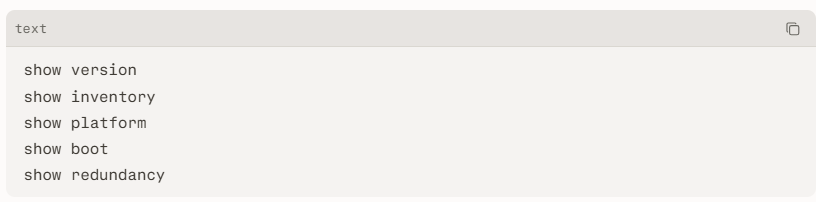
The output will display the active IOS XE release, which should be compared against Cisco's fixed-release table.
Scanner Signatures:
Vulnerability scanners can detect affected releases by querying the IOS XE version banner or parsing show version output through authenticated checks. Scanners should not attempt behavioral exploitation testing, as Cisco has not published a supported validation method.
Log Indicators:
Review logs for unexpected configuration changes, new local users, modified AAA settings, or unplanned service modifications. These indicators are not CVE-specific but may signal unauthorized management-plane activity.
Behavioral Anomalies:
Monitor for unexplained device reloads, routing changes, tunnel modifications, or telemetry destination changes. Such anomalies could indicate compromise but are not unique to this CVE.
Network Exploitation Indicators:
Cisco has not published exploit-specific indicators of compromise for CVE-2026-20272. Detection should focus on suspicious management-plane and configuration activity rather than CVE-specific signatures.
C — Mitigation & Remediation
1. Immediate (0–24h):
- Inventory all IOS XE devices and record their running software versions.
- Identify devices running affected releases (17.9.x prior to 17.9.10, 17.12.x prior to 17.12.8, 17.15.x prior to 17.15.6, 17.18.x prior to 17.18.4/17.18.4a, 26.1.x prior to 26.1.2).
- Restrict management-plane access to dedicated networks and hardened jump hosts where operationally feasible.
- Disable unused management services (HTTP, RESTCONF, NETCONF, SNMP) if they are not required.
2. Short-term (1–7d):
- Upgrade affected devices to the appropriate fixed IOS XE release as documented by Cisco.
- Validate post-upgrade that the device is running the fixed version using
show versionandshow boot. - Verify operational functions including interfaces, routing, tunnels, wireless, authentication, and high availability.
- Preserve before-and-after evidence packages for audit and compliance purposes.
3. Long-term (ongoing):
- Implement a vulnerability management program that tracks IOS XE releases and Cisco security advisories.
- Establish a controlled upgrade workflow with lab testing, staged deployment, and rollback procedures.
- Harden management-plane access with centralized authentication, least privilege, session logging, and strong credential policies.
- Monitor for suspicious configuration activity and maintain comprehensive logging of administrative actions.
Official Vendor Patch:
Cisco lists the following first fixed releases for the August 2026 IOS XE security-hardening advisory:
| IOS XE Release Train | First Fixed Release |
|---|---|
| 17.9 | 17.9.10 |
| 17.12 | 17.12.8 |
| 17.15 | 17.15.6 |
| 17.18 | 17.18.4 or 17.18.4a |
| 26.1 | 26.1.2 |
Cisco states that there are no workarounds that address the vulnerabilities, so upgrading to a fixed release is the only supported remediation.
Interim Mitigations:
For environments that cannot patch immediately, restrict management access to trusted networks, disable unused services, and enhance monitoring of configuration changes. These measures reduce exposure but do not eliminate the vulnerability.
D — Best Practices
- Maintain an authoritative inventory of all IOS XE assets with verified running versions and hardware models.
- Subscribe to Cisco security advisories and prioritize upgrades for critical-severity vulnerabilities affecting network infrastructure.
- Implement defense-in-depth controls including network segmentation, management-plane hardening, and centralized logging.
- Conduct regular penetration tests to validate the effectiveness of your vulnerability management and patching processes.
- Establish a controlled change-management workflow with pre-upgrade validation, staged deployment, and post-upgrade verification.
Leave Comment